.png)
%201.png)


What to Do When Your Richmond Closing Dates Don't Line Up
Selling one home and moving into another does not always happen on the same day. Your buyer may need possession immediately, your new construction schedule may shift, or your next lease may not begin until several days after your current one ends.
When those dates do not line up, the main question is simple: where should your belongings go in the meantime?
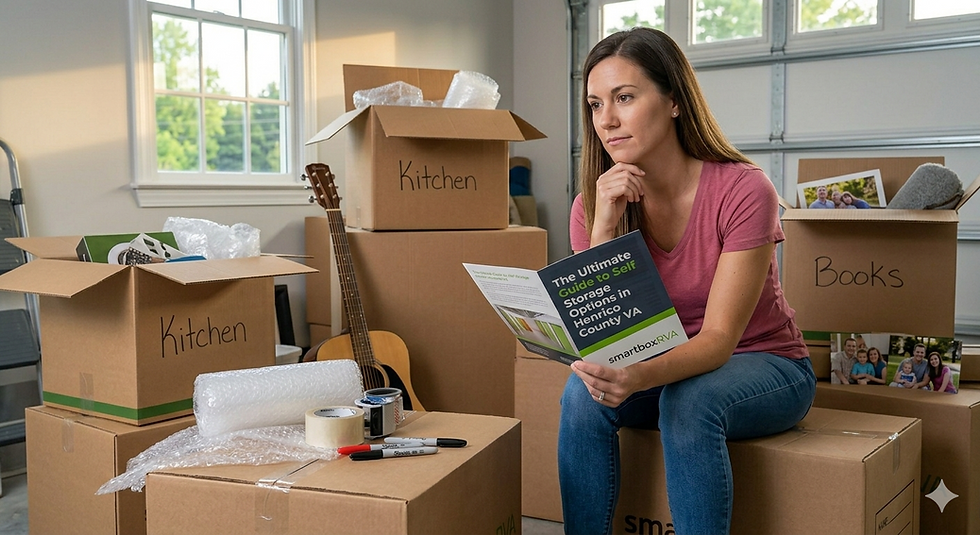
For homeowners and renters across the Richmond area—from the City of Richmond to Chesterfield, Henrico and Hanover County—portable storage can provide a flexible bridge between move-out and move-in. Instead of rushing everything into a rental truck and then unloading it into a separate storage unit, you can load a portable container at your current property, have it stored if needed, and arrange delivery when the next location is ready.
Why closing-date gaps happen
Even a carefully planned move can develop a timing gap. Common situations include:
A home sale closes before the purchase of the next home.
A buyer needs possession before the seller's new home is ready.
New construction or renovations take longer than expected.
An apartment or townhome lease ends before the next lease begins.
A closing is postponed because of financing, inspections, repairs or paperwork.
A family needs time to stage, declutter or prepare a home for sale.
The gap may last a few days, several weeks or longer. New-construction schedules can be a particular concern in growing parts of Chesterfield, Henrico and Hanover County when a current home must close before a new home is ready. Choosing an option that can adjust with the schedule helps reduce the need to move the same belongings repeatedly.
Your storage options between homes
Keep both homes or apartments for an overlapping period
Paying for overlapping occupancy may make the move simpler when it is available and affordable. It provides direct access to your belongings, but it may mean paying two mortgages, rents or sets of utilities at the same time.
Rent a traditional self-storage unit
A conventional storage unit can work well when you expect to visit your belongings frequently. However, it often requires loading a truck, unloading at the storage facility, reloading later and unloading again at the new home.
Ask a moving company about short-term storage
Some full-service movers offer overnight or short-term storage between addresses. This can be useful when the mover is already handling the entire relocation. Ask how long items can remain stored, how access works and how additional days affect the price.
Use a portable storage container
Portable storage combines part of the moving and storage process. The container is delivered to your property, you load it on your schedule, and it can then be transported to your next local address or stored until you are ready.
This approach can be especially helpful when the final move-in date is uncertain because the container can remain part of the same moving plan instead of requiring a separate self-storage move.
How SmartBox can bridge the gap
SmartBox provides portable moving and storage containers throughout the Richmond area.
The basic process is:
Schedule delivery. SmartBox delivers the container to your home, apartment community or business when site access and placement allow.
Pack at your pace. Load your belongings without trying to complete the entire job during a one-day truck rental.
Choose moving or storage. When the container is ready, SmartBox can pick it up for local or regional transportation or store it at its facility until the next property is ready.
Arrange redelivery. Once you have possession of the new home, schedule delivery and unload on your timetable.
If you already know portable storage fits your situation, you can request a personalized quote at any point.
SmartBox containers measure approximately 5 feet wide by 8 feet long by 7 feet high. The smaller container size can help customers divide belongings by room, project or priority, and multiple containers can be used when one is not enough.
See what fits in a SmartBox before estimating how many containers your move may require.
Plan for access and placement early
Container placement should be part of the moving plan, especially for apartments, townhomes and managed communities.
Many suburban Richmond-area properties have private driveways or potential placement areas. Apartments, townhomes, condominiums and HOA-managed communities may require additional planning or prior approval. Ask about:
Driveway width, slope and overhead clearance
Parking restrictions and fire-lane access
HOA, condominium or property-management rules
Delivery and pickup time restrictions
Permission for placement on shared or rented property
Local requirements for placement on private property or in a public street, sidewalk or alley
Rules differ by locality and property. City residents can review Richmond's private-property portable-storage guidance. If a container may occupy a street, sidewalk, alley or other public space, consult the city's Right-of-Way Management guidance before scheduling delivery.
Customers outside the city should confirm requirements with their county, town, HOA, landlord or property manager. SmartBox's Chesterfield, Henrico and Hanover County pages provide additional local placement and community-planning context.
Pack for an uncertain timeline
When you do not know exactly when the container will be redelivered, pack differently than you would for a same-day move.
Keep these items with you:
Closing, lease and insurance documents
Identification, medications and essential toiletries
Work equipment and chargers
Several days of clothing
Children's and pets' daily necessities
Irreplaceable documents and valuables
Anything you may need before the container is delivered again
Label boxes clearly and place less-essential items toward the back. If you may need access to certain belongings, discuss that possibility before the container is picked up so you understand the available options.
What if the closing is delayed again?
Closing dates can change more than once. Before selecting any moving or storage option, ask:
How scheduling changes are handled
Whether storage is billed monthly or daily
How much notice is needed for redelivery
What delivery charges apply
Whether the new address falls inside the service area
Review the pricing and service-area details in the FAQ below, or request a personalized quote using both addresses and the best dates available.
A simple checklist for storage between homes
Before move-out day:
Confirm the earliest possible move-out date and latest likely move-in date.
Identify what must remain accessible during the gap.
Estimate the number of containers needed.
Confirm access, placement and community requirements at both addresses.
Ask how schedule changes and redelivery are handled.
Keep essential and irreplaceable items with you.
Request a quote using both addresses and the best available dates.
Frequently asked questions
Can SmartBox store my container between closing dates?
Yes. SmartBox can pick up a loaded container and store it until you are ready for delivery, subject to scheduling, service-area and project requirements.
Can the container stay at my property?
On-site storage may be possible when the property has suitable access and placement space. HOA rules, leases, property-management policies and local requirements may affect where a container can be placed and how long it can remain.
What if I do not know my exact move-in date?
Provide the best dates available when requesting a quote and explain that the closing or construction schedule may change. Ask how much notice SmartBox needs for redelivery once the new property is ready.
Does SmartBox handle long-distance moves?
SmartBox RVA focuses on local and regional service, generally within approximately 75 miles of Richmond. Confirm the origin and destination addresses when requesting a quote.
How much does storage between homes cost?
Container storage starts at $89 per container, per month, plus delivery, with applicable tax on the storage-rental portion. The complete price depends on the number of containers, transportation and project details.
Make the space between moves easier
A closing-date gap does not have to turn into multiple rushed moves. With a portable container, you can pack at your pace, store your belongings when necessary and arrange delivery when the next home is ready.
Explore portable moving containers, review portable storage options, or get a personalized SmartBox quote for your Richmond-area move.


Comments